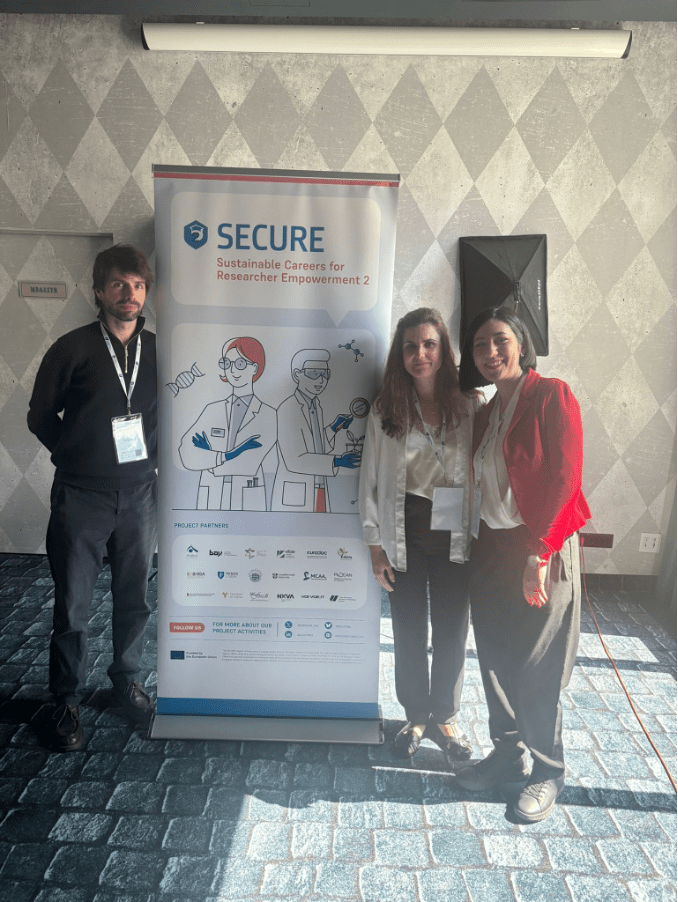
The European project Sustainable Careers for Research Empowerment (SECURE2) held its General Assembly on 18–19 May 2026 in Szczecin, Poland, hosted by the West Pomeranian University of Technology (ZUT). The event featured a dedicated session for researchers on the SECURE Research Career Framework (RCF), including discussions on which areas of the framework are most needed by researchers and how these can be effectively implemented at their local institutions. This online session was organized jointly by the Marie-Curie Alumni Association (MCAA), European Council of Doctoral Candidates and Junior Researchers (Eurodoc) and the International Consortium of Research Staff Associations (ICoRSA), partners of SECURE2.
The top priorities identified in the discussions for career development and implementation of tenure-track models were transparency and recognition through clear career pathways, with supportive management and fair pay also featuring prominently. Tenure track principles were also linked to fair pay and benefits related with job security and equitable treatment.
Participants noted that while stability remains a concern, the focus has shifted toward building diverse, well-integrated career pathways that bridge academia, industry, and government.
Skills development was recognized as an area that tends to be better covered in research systems where researchers are classified as trainees or short-term staff. However, the prevalence of short-term contracts, which drives high levels of mobility, also contributes to skills development being treated as lower priorities in comparison with stability. Underfunding of research institutions and universities was also identified as a major obstacle to strategic planning and institutional reforms.
Regarding advocacy tools and policy engagement strategies, participants recognized the importance of collective action, acknowledging the role of national organizations and local researcher associations in bridging high-level EU policies and local implementation. However, several key obstacles were identified: the underrepresentation of early career researchers in governance bodies, the lack of recognition for advocacy time in research assessment and evaluation, and insufficient awareness across the research community of how to engage effectively.
A report of the session will be shared soon. SECURE2 will continue its engagement with researchers through future activities.
If you would like to stay informed about upcoming SECURE2 activities, events, and project developments, you can subscribe to the SECURE2 newsletter by sending us a message here: contact@secureproject.eu
Follow SECURE2 on social media – LinkedIn @SECURE2, X @secure_eu, and website https://secureproject.eu/